The route
One day, 30 September 2026: from Pancevo east across the Banat to Vrsac, into Romania at the Vatin crossing, north to Timisoara, and back to Vrsac the same night.
Reconstructed itinerary, not a recorded GPS track. Each marker is where a photo was taken, rounded to about a kilometre; the dashed line only joins them in time order and does not follow the road. Hollow markers are approximate phone-network positions. Blue: the way out, Pancevo → Banat → Vrsac → Vatin → Timisoara. Red: the way back, Timisoara → Vrsac. The crossing back into Serbia is not on camera, so it has no marker. Click a marker for the photo.
Times are local: Serbian time in Serbia, Romanian time in Romania, which is one hour ahead.
- 07:49Pancevo
- 08:40–09:00East across the Banat
- 09:38Near Vrsac
- 09:56–10:04Vatin border crossing (Serbian time)
- 11:22Still at the crossing, Romanian side (Romanian time)
- 12:32–12:40North toward Timisoara
- 14:44Timisoara
- 15:36Timisoara Est station
- 15:42–15:46A street of villas
- 19:22, 19:37Noodles at Shopping City Timisoara
- 21:14Heading south, back toward Serbia
- 22:50LPG at Gaspetrol, Vrsac (Serbian time)
- 23:00Vrsac, last photo of the day
Why Timisoara, and the road there
Timisoara is the closest big city to Pancevo that is in another country: about two hours of driving, with the border in the middle. We went for one day, my mother and I. She wanted the Amazonia water park, I wanted to see the city. Nobody needed a hotel, and that is the whole point of this route: a foreign city, a different language and currency, and you are home before midnight.
The road is the ordinary road 10, the one every Banat village is strung along: Banatsko Novo Selo, Vladimirovac, Banatski Karlovac, Pavlis, then Vrsac. No motorway, no toll, speed limits through every village, tractors in the morning. After Vrsac the same road continues through Mali Zam to the Vatin crossing. I had the location on in the camera, so the markers on the map are the real road: that is how I know where every clip was shot.
Before leaving I checked the waiting times at the border online. Vatin was empty: we did not queue in either direction, a glance at the passports and through. On the Romanian side the road becomes DN59 and runs straight north: Denta, Voiteg, Jebel, then the city. Romania is one hour ahead, so you lose an hour on paper the moment you cross.
The one thing to do before the border, not after: the road vignette (rovinieta). It is sold online and takes a minute; a one-day one for a car cost me 18.40 lei, €3.51 on the card, bought on roviniete.ro. It is tied to the number plate, there is nothing to stick on the windscreen. Longer vignettes and other vehicle classes are on the official CNAIR price list.
Timisoara in an afternoon
We parked at Amazonia, in the east of the city; parking there was free with the ticket, and so was the car park at Shopping City in the south in the evening. In a day of driving around the city I did not pay for parking once.
While my mother was in the water park I walked. Timisoara has a public drinking fountain on the street with a sign that says Fantana publica forata, a drilled public well; fill your bottle, it is free. Timisoara Est is a small railway station with a grand entrance, and the streets north-east of it are lined with villas that look like they belong in a film about an old empire, which in a way they do: the city was part of Austria-Hungary until the end of the First World War.
Fabric: the old Serbian quarter
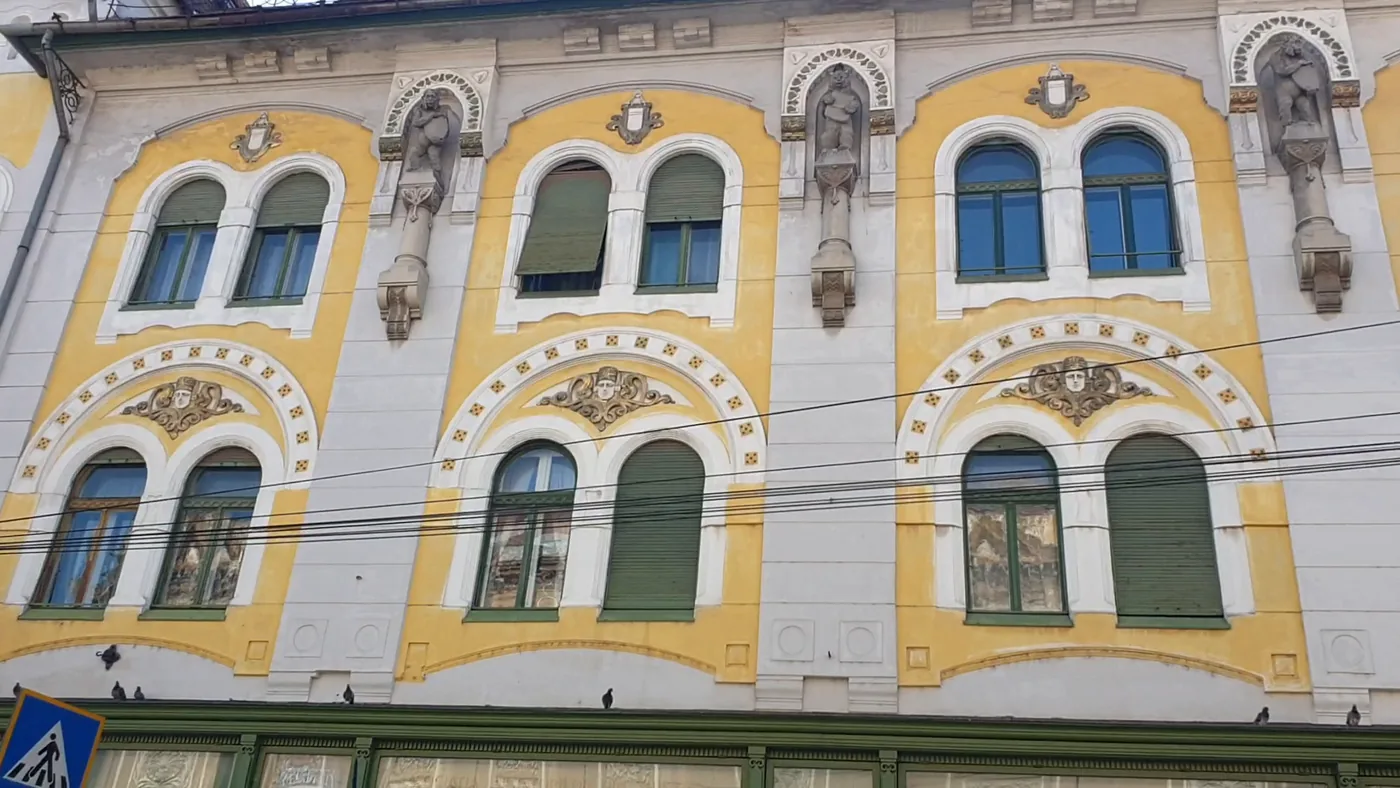
The part I wanted to see is Fabric, the district east of the centre across the Bega canal. This was the Serbian town of Timisoara for two centuries, and the main square, Piata Traian, still has the Serbian Orthodox church of St George, built in the 1740s and 1750s, at one end. When I got there the whole square was dug up: the tram line through Fabric is being rebuilt, so what you see below is pallets of new paving, an excavator and tape, not the promenade in the brochures. The houses around it are worth the walk anyway, baroque at the bottom, Secession on top, most of them waiting for a facelift.
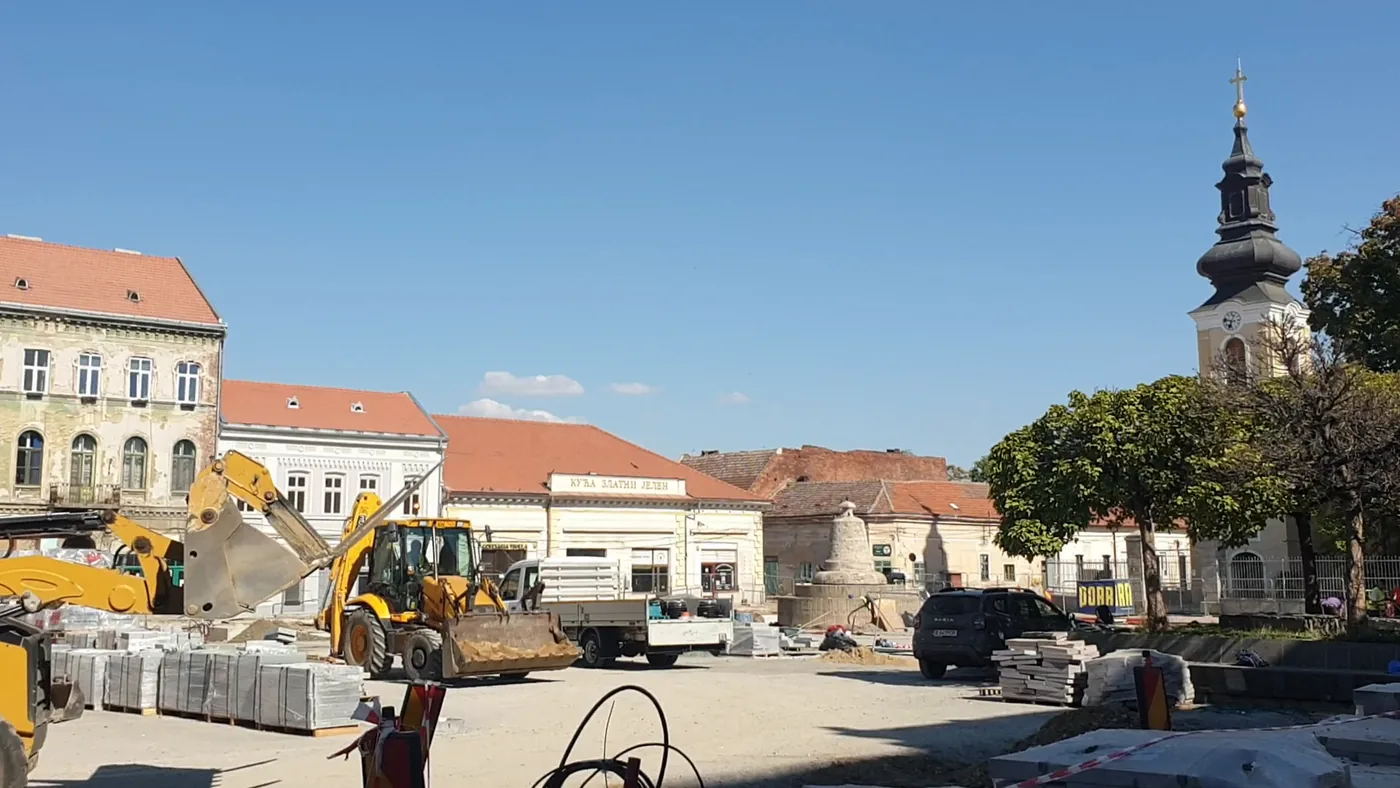
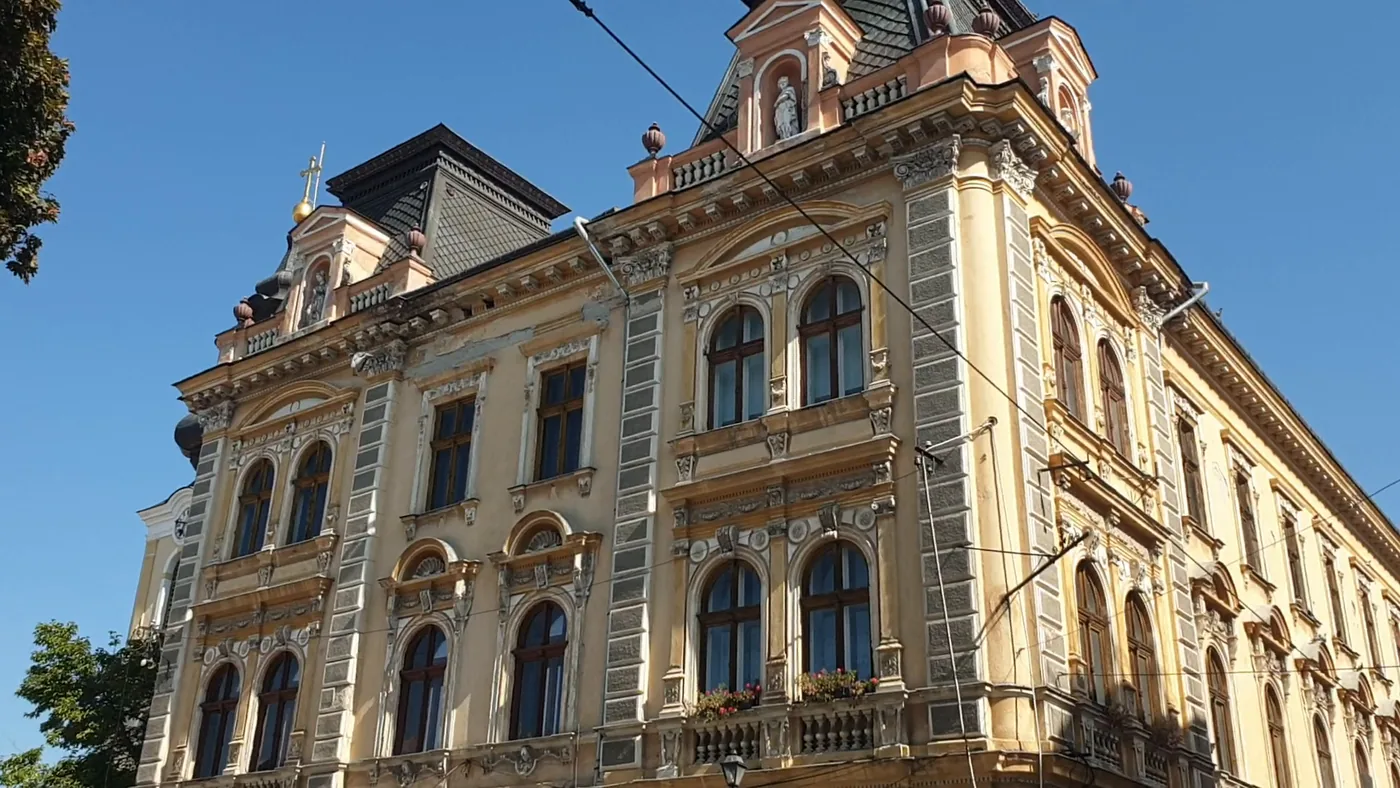
Piata Traian, 30 September 2026. Left: the square dug up for the tram works, the Serbian church tower behind. Right: a corner palace on the square.
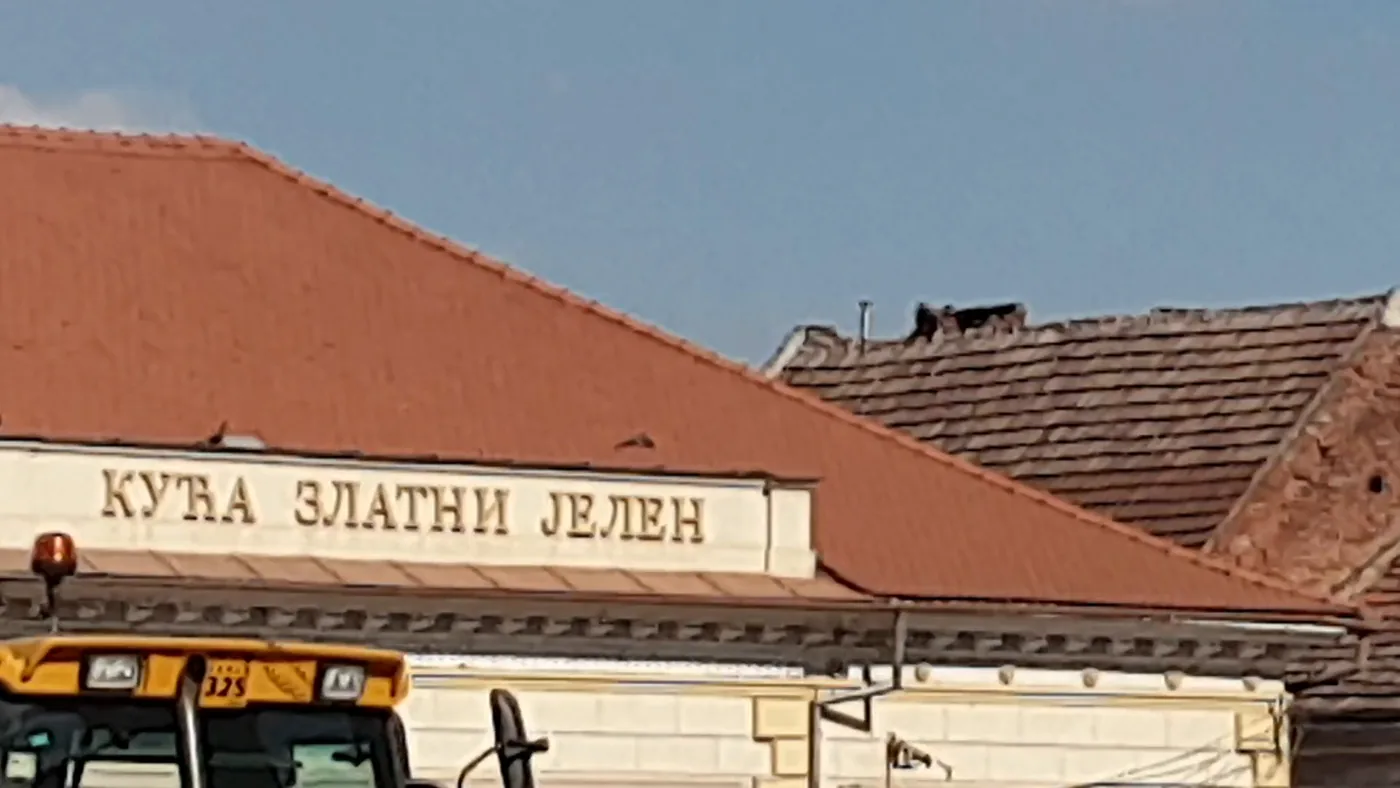
One of the low old houses on the square still carries its name in Serbian Cyrillic on the gable: Кућа Златни јелен, the Golden Stag House. The square is being rebuilt around it; the excavator in the corner of the picture was parked right in front.
Two hundred metres west, on Piata Romanilor, is the Millennium Church, a brick church with two towers that the city built around 1900 for the thousandth anniversary of Hungary, which is what Timisoara was then. The door was open and the nave was empty; it is the biggest Catholic church in the city and on a weekday afternoon I had it to myself.
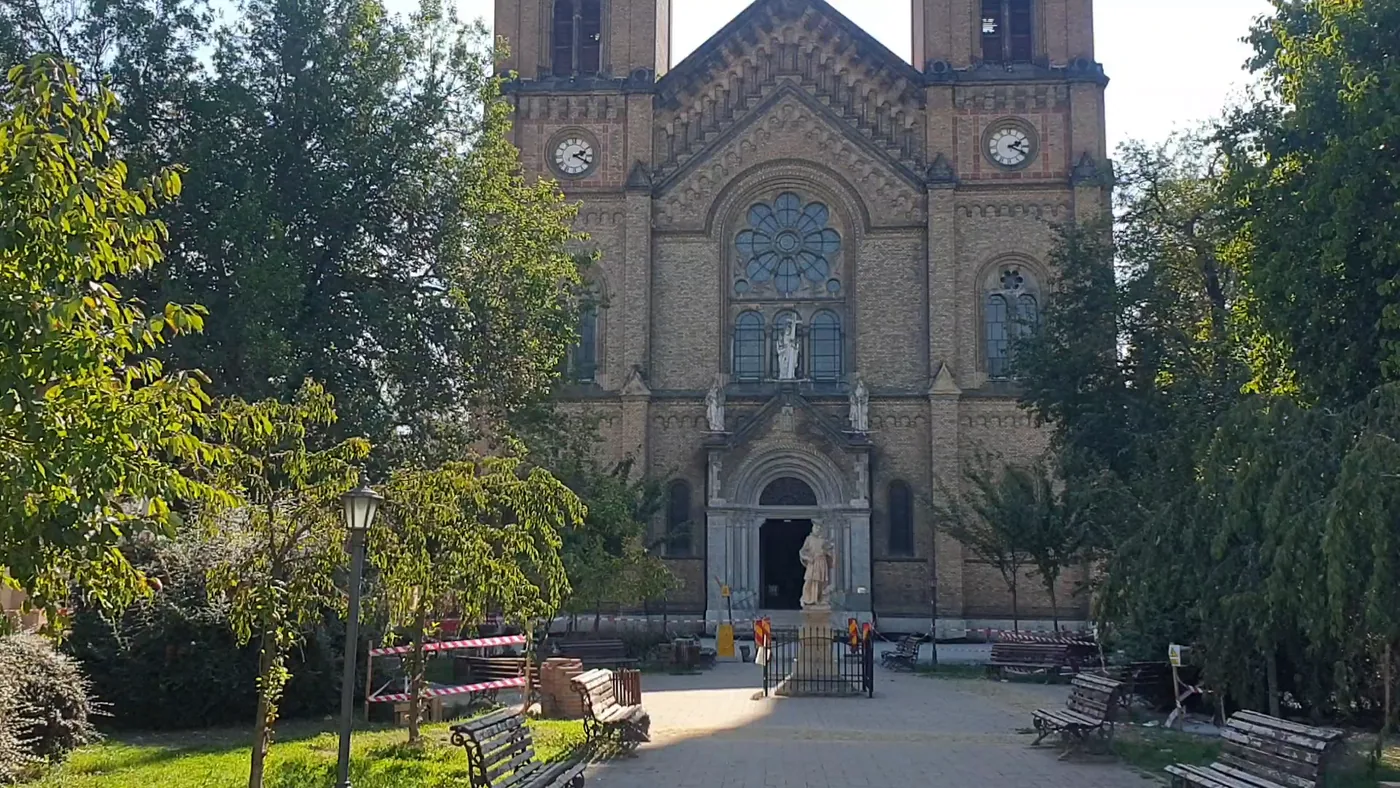
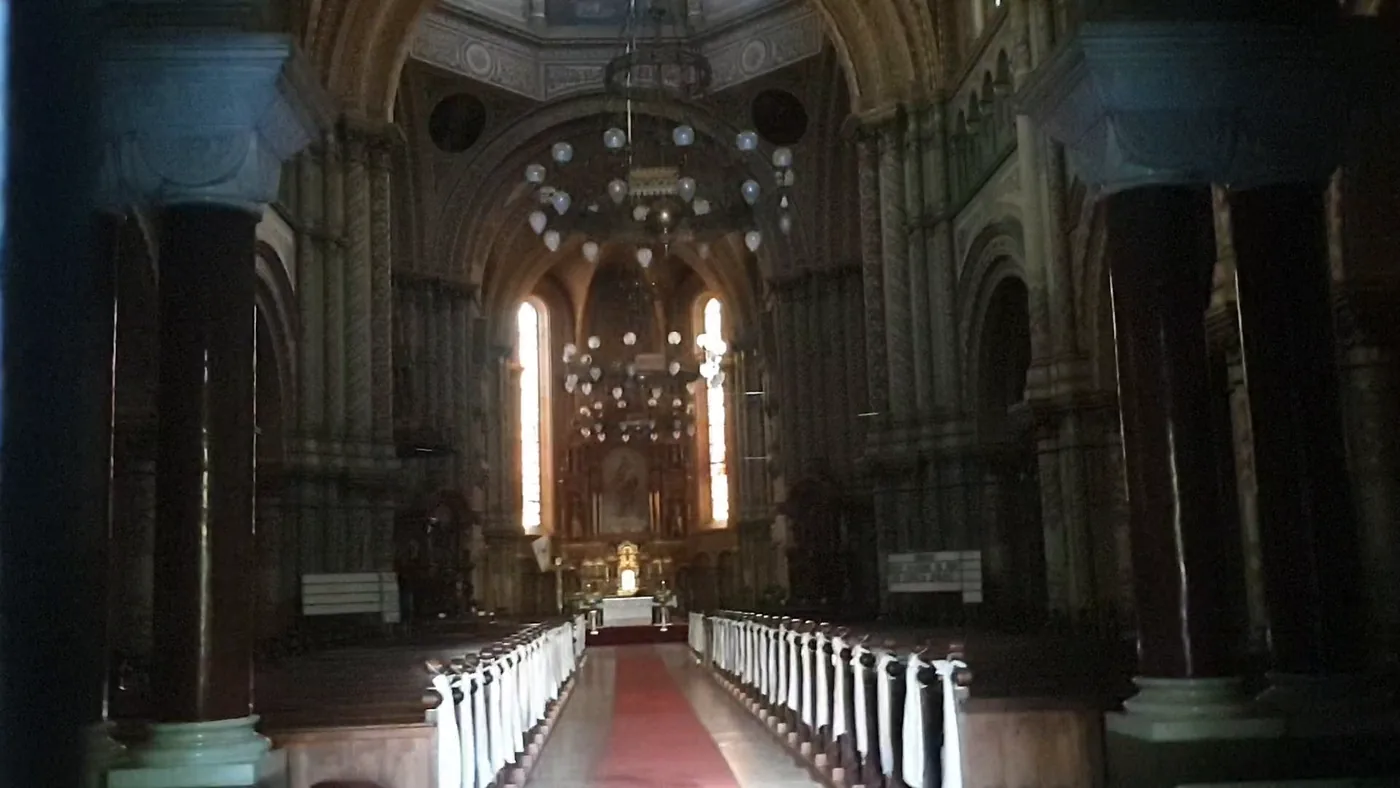
The Millennium Church on Piata Romanilor. Left: from the park in front. Right: the nave.
Round the corner, on a street that was also dug up, is the Fabric synagogue from the 1890s. It has been closed since the 1980s and the city is restoring it; for now the bricked-up windows are covered with bright painted panels, which makes it the most photographed ruin in the district.
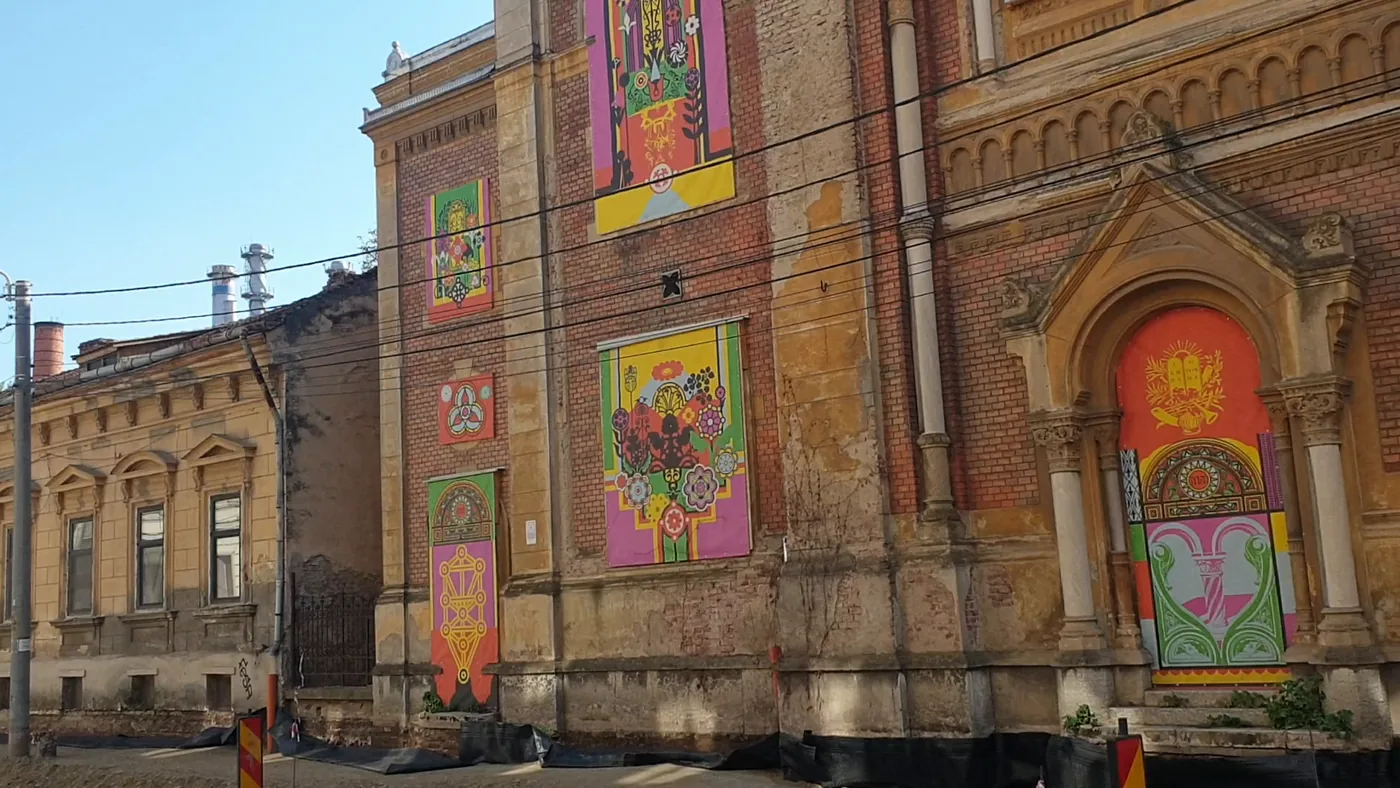
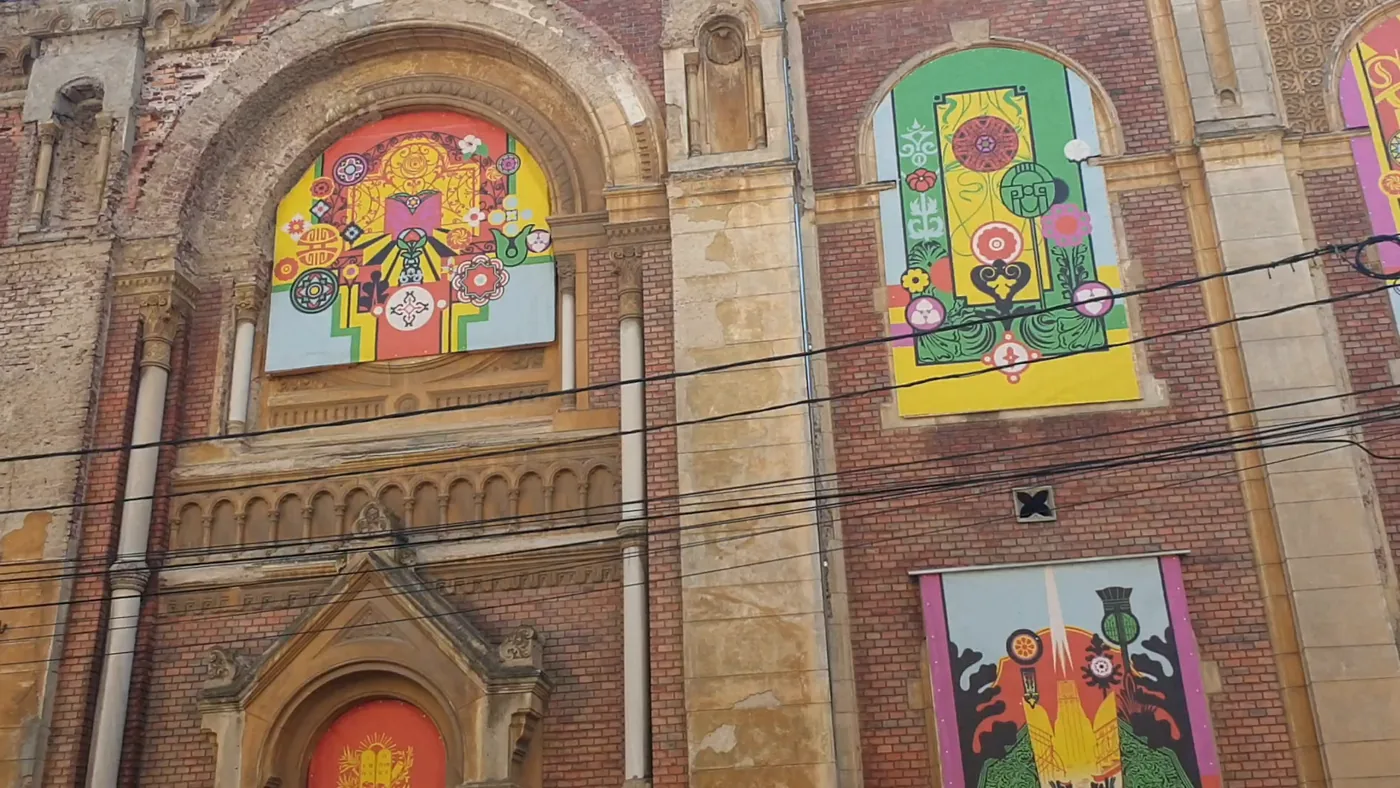
The Fabric synagogue. Left: the building, with the old house beside it. Right: the painted panels in the window arches.
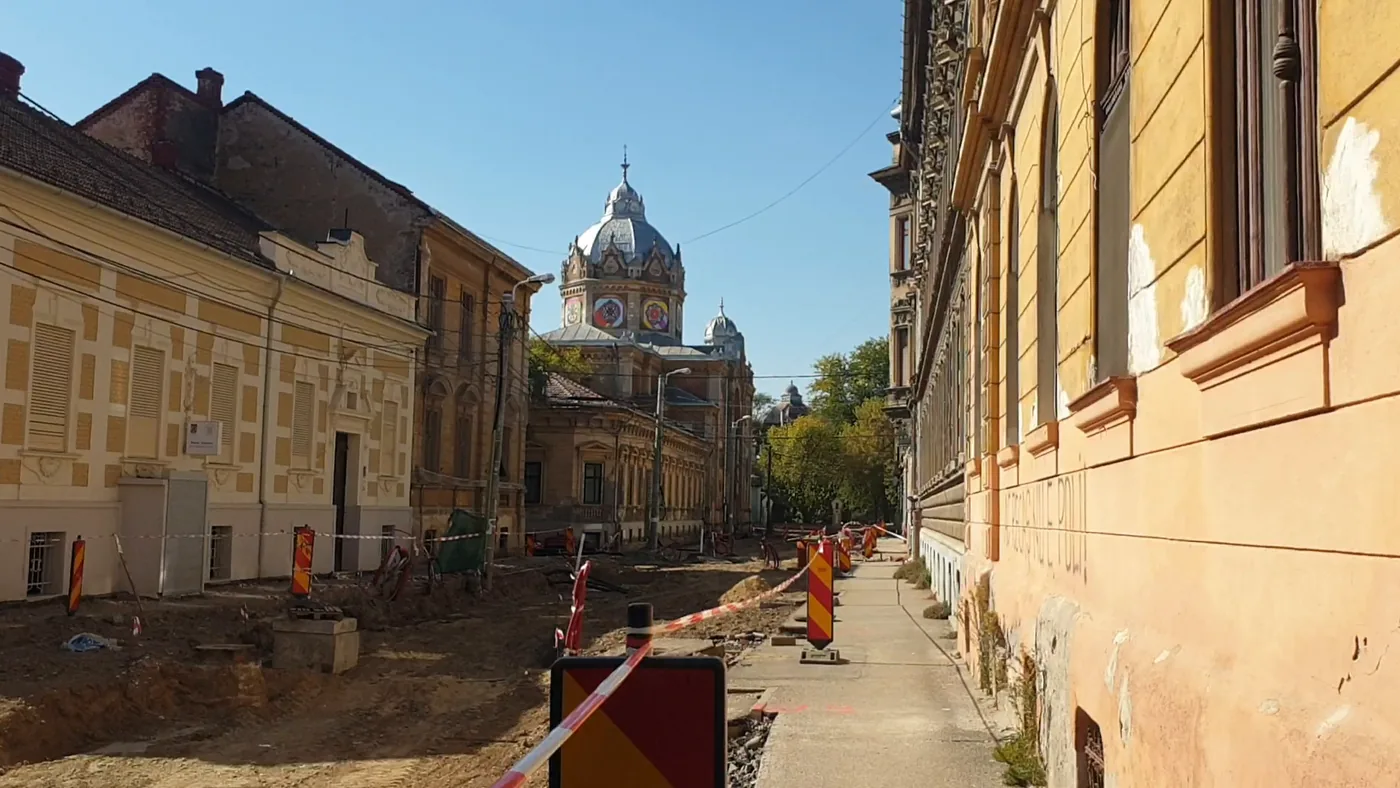
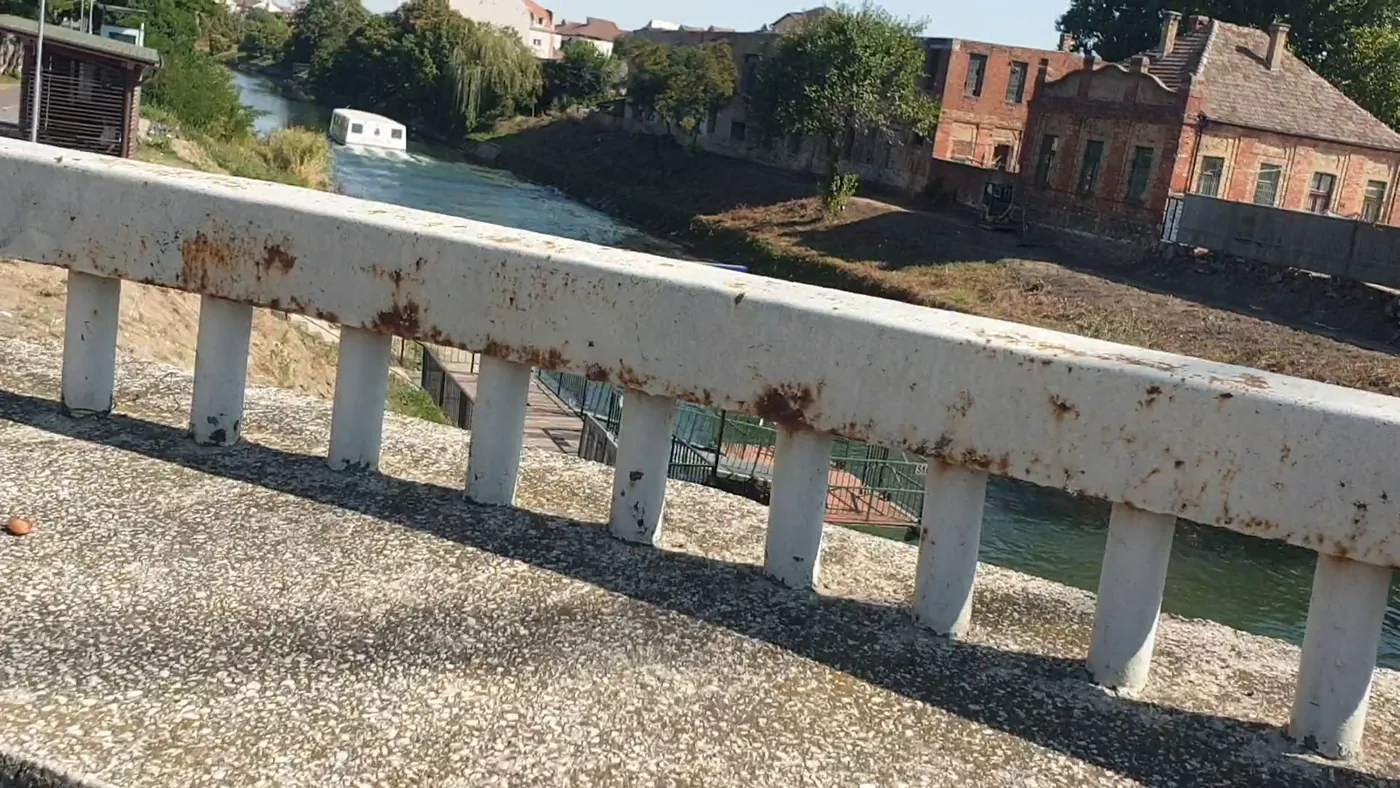
Left: a side street in Fabric during the works, a church dome at the end. Right: the Bega canal at the edge of the district.
The Bastion and the centre
From Fabric I walked back towards the centre along the canal to the Theresia Bastion, the biggest surviving piece of the eighteenth-century fortress. The arches now hold shops, a few restaurants and the tourist information centre, which has a wooden relief map of Timis county with the sights numbered: a good place to decide what to do with a second day, if you have one.
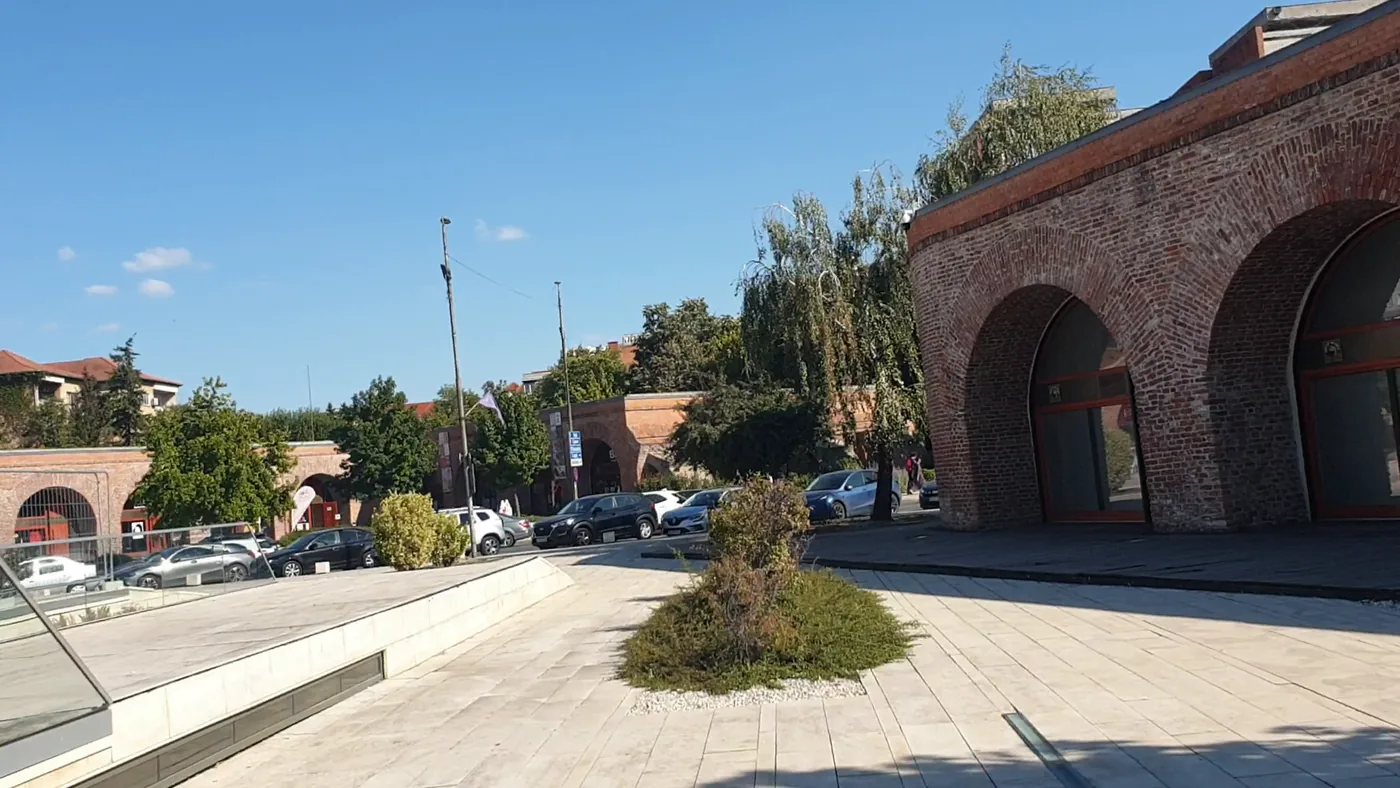
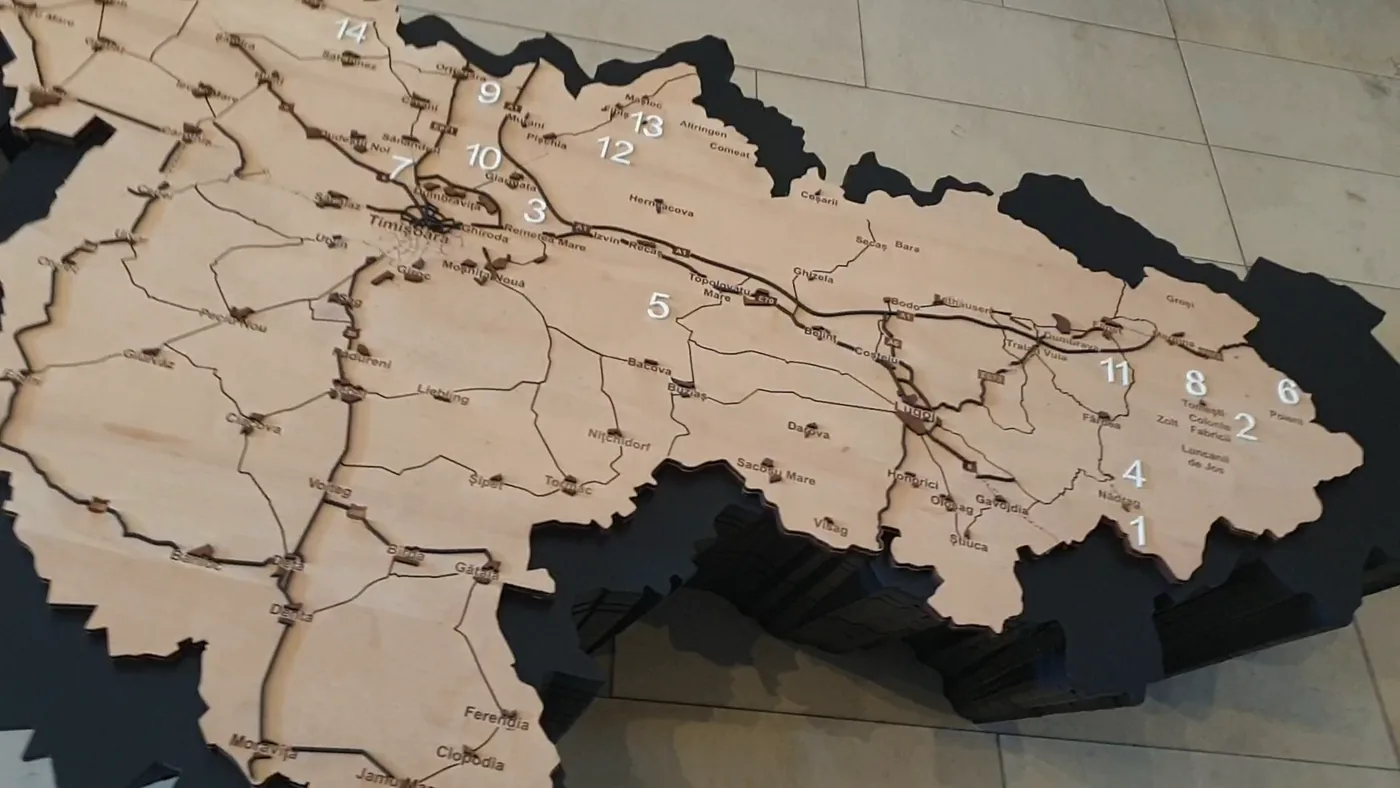
The Theresia Bastion. Left: the arches from the square. Right: the wooden map of Timis county inside the tourist information centre.
Fountain, station, villas
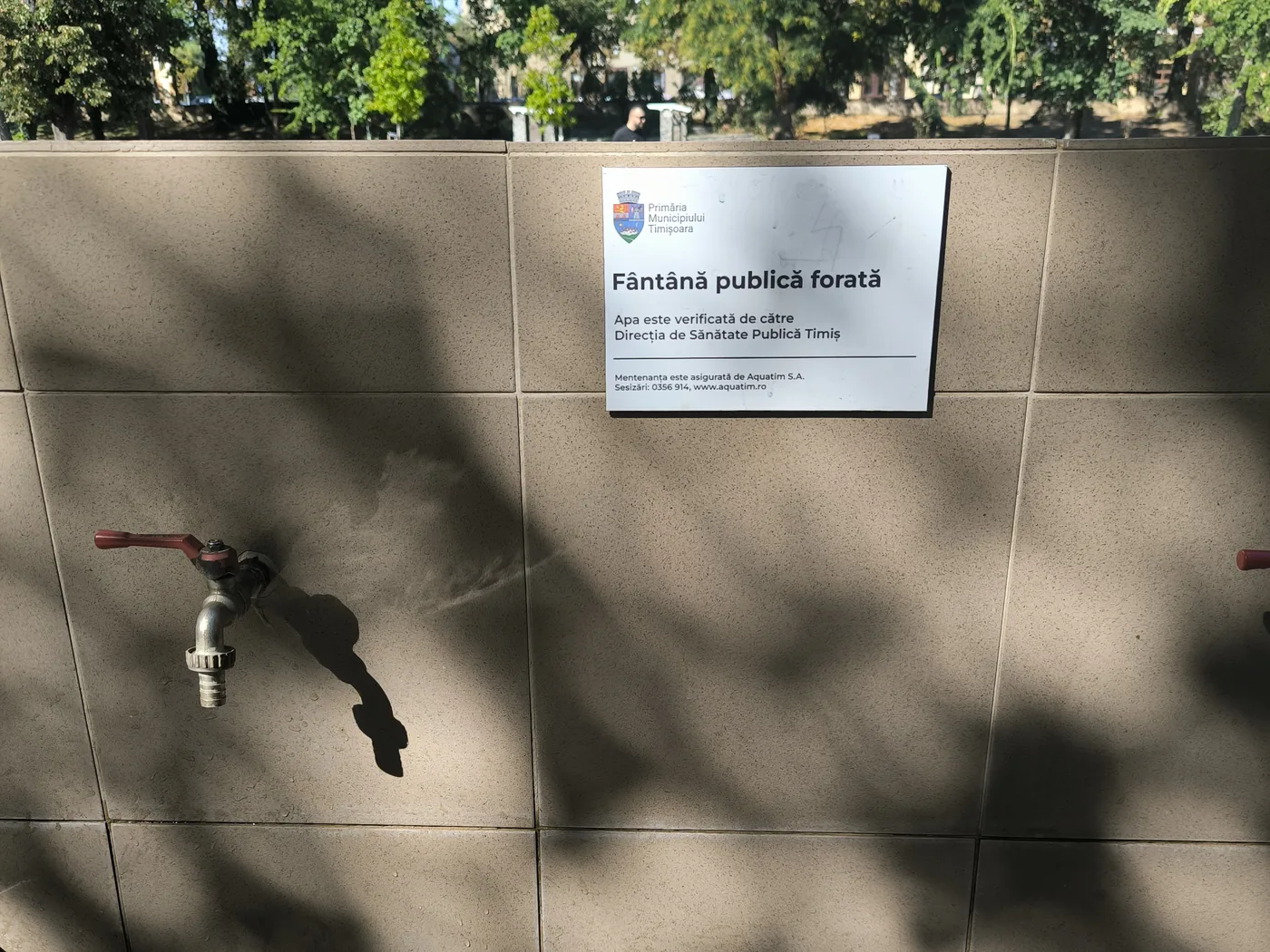
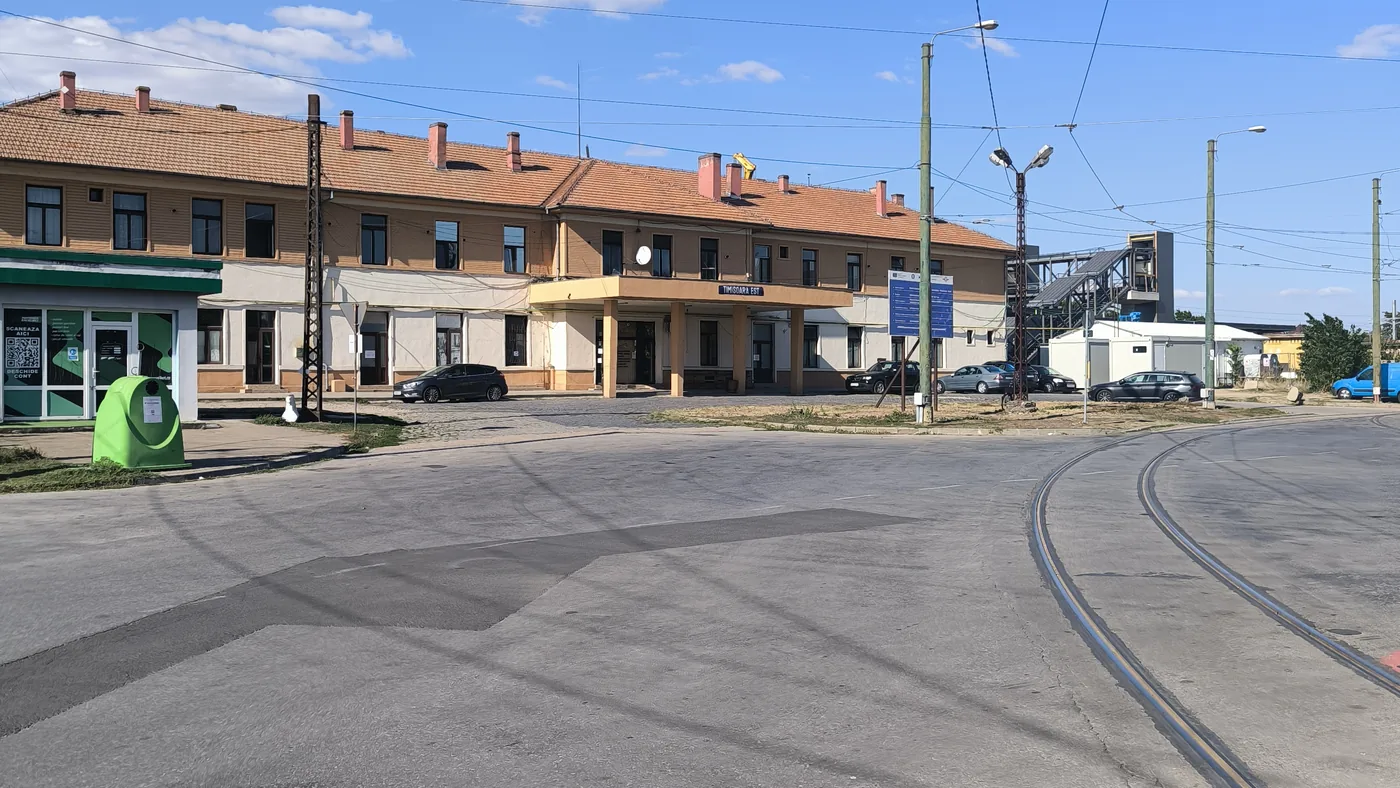
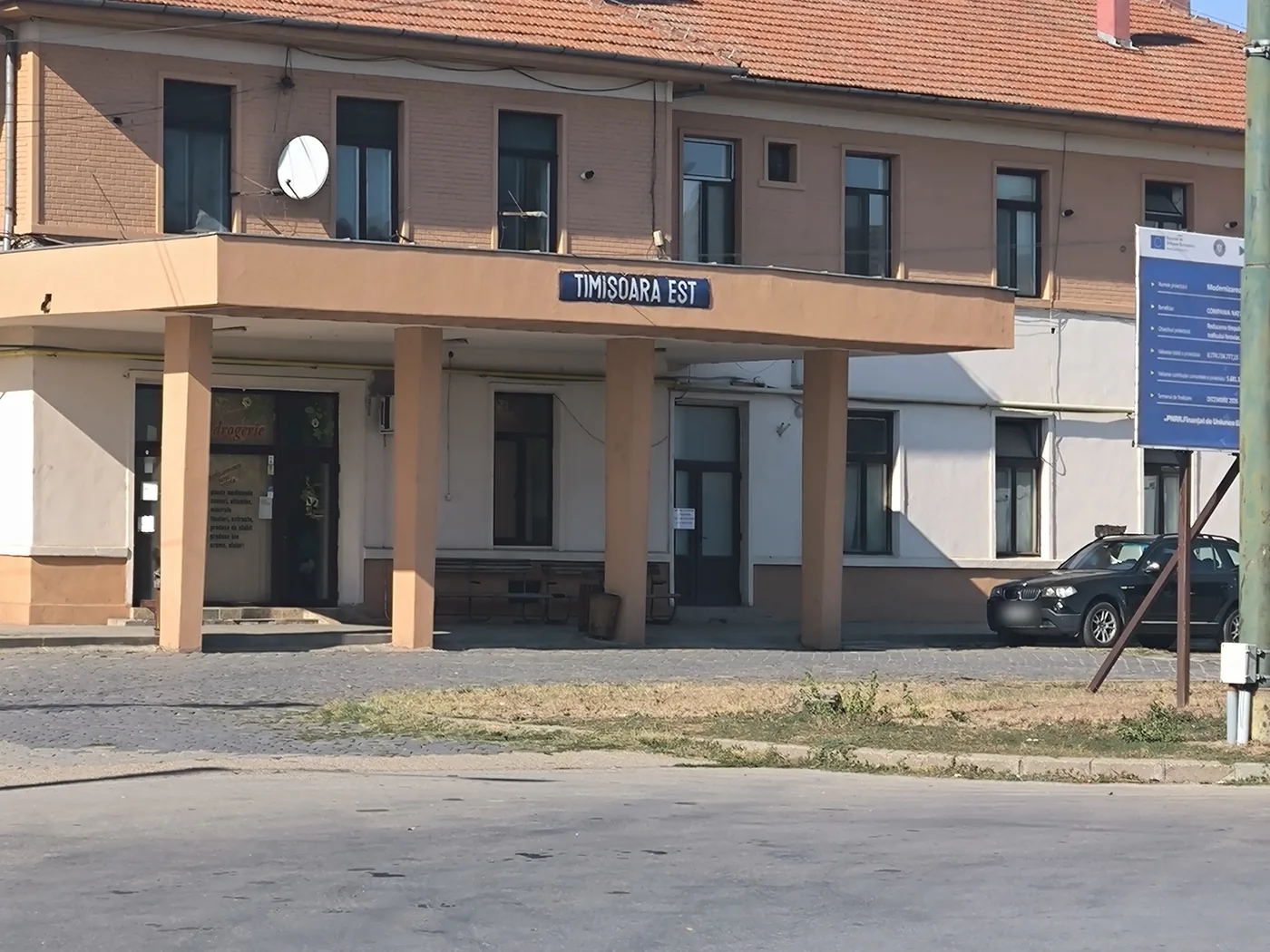
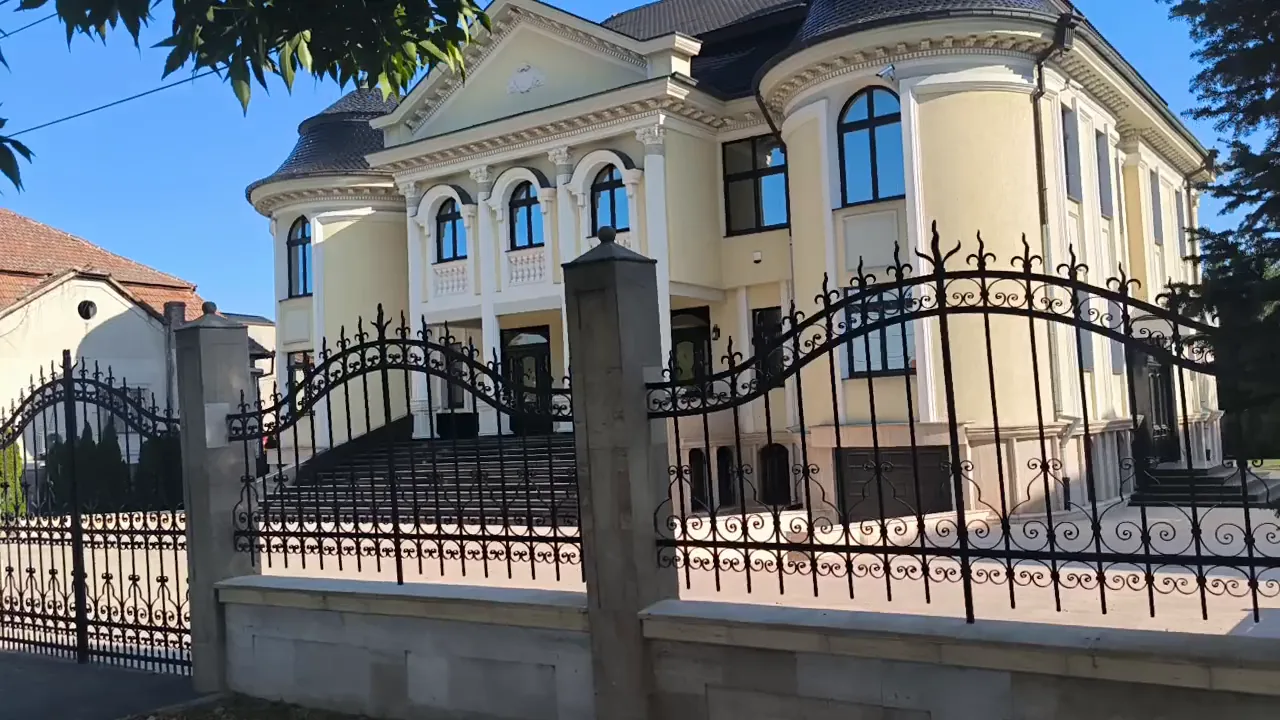
Left: the entrance of Timisoara Est. Right: one of the villas, about 15:45.
Amazonia water park
Amazonia is a big indoor water park with slides, a children’s pool full of water toys and a long outdoor pool. My mother spent most of the afternoon there. Her senior ticket was about 20 RON; that is from memory, I do not have the receipt. The photos below are of the park itself, taken without people in them.
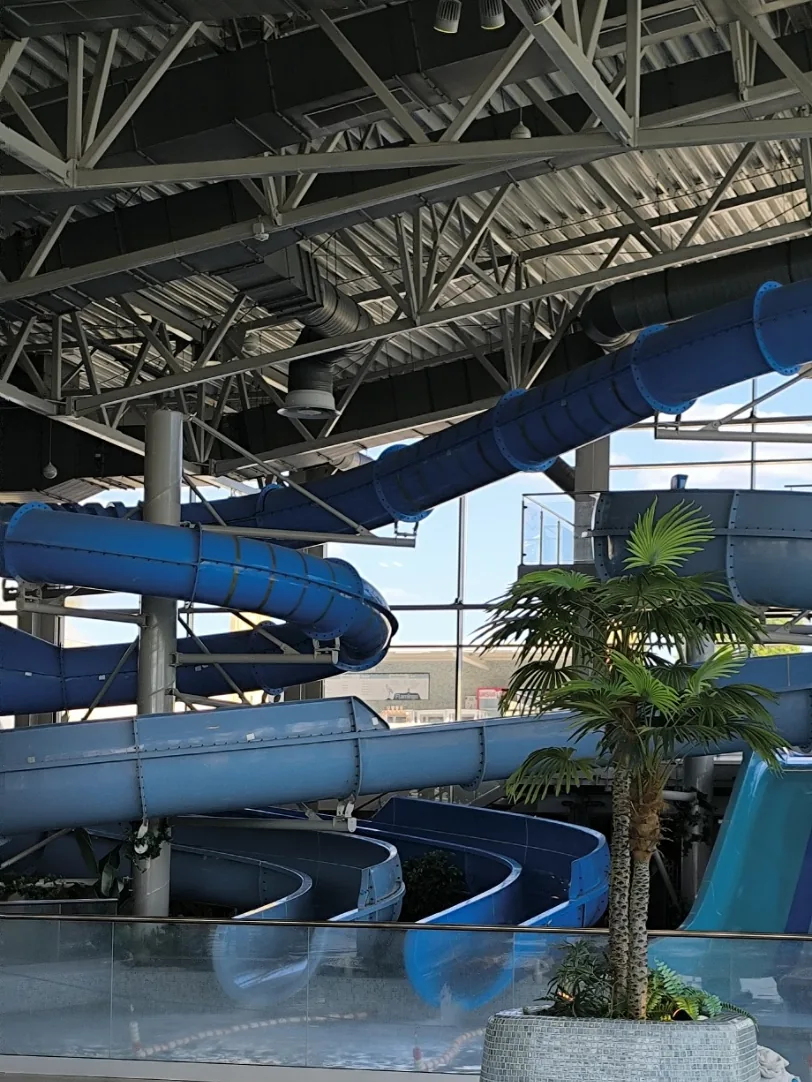
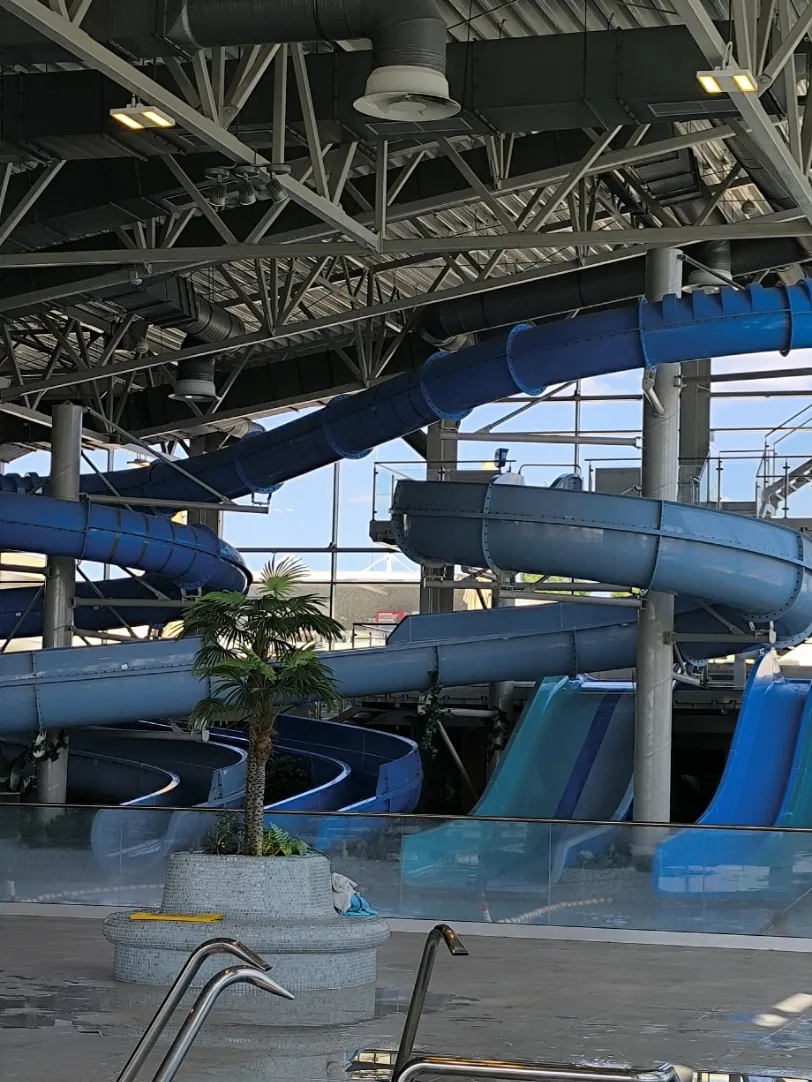
Amazonia water park, Timisoara. Left: the slides. Right: slides and a whirlpool.
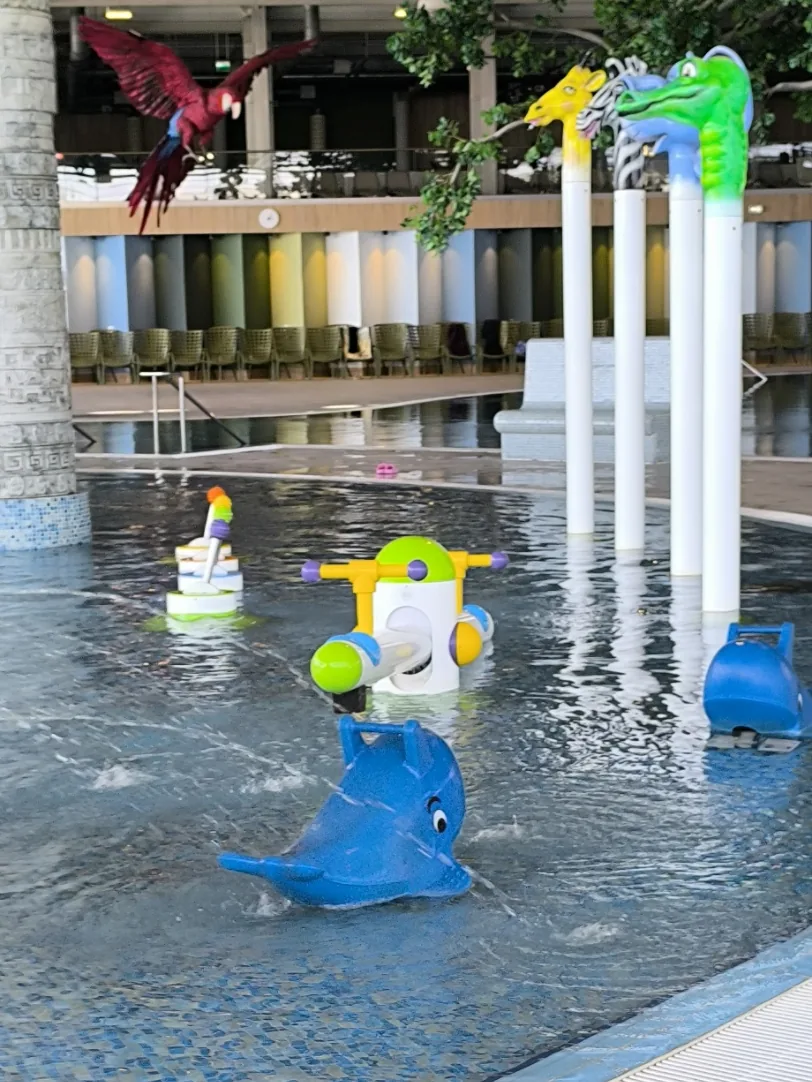
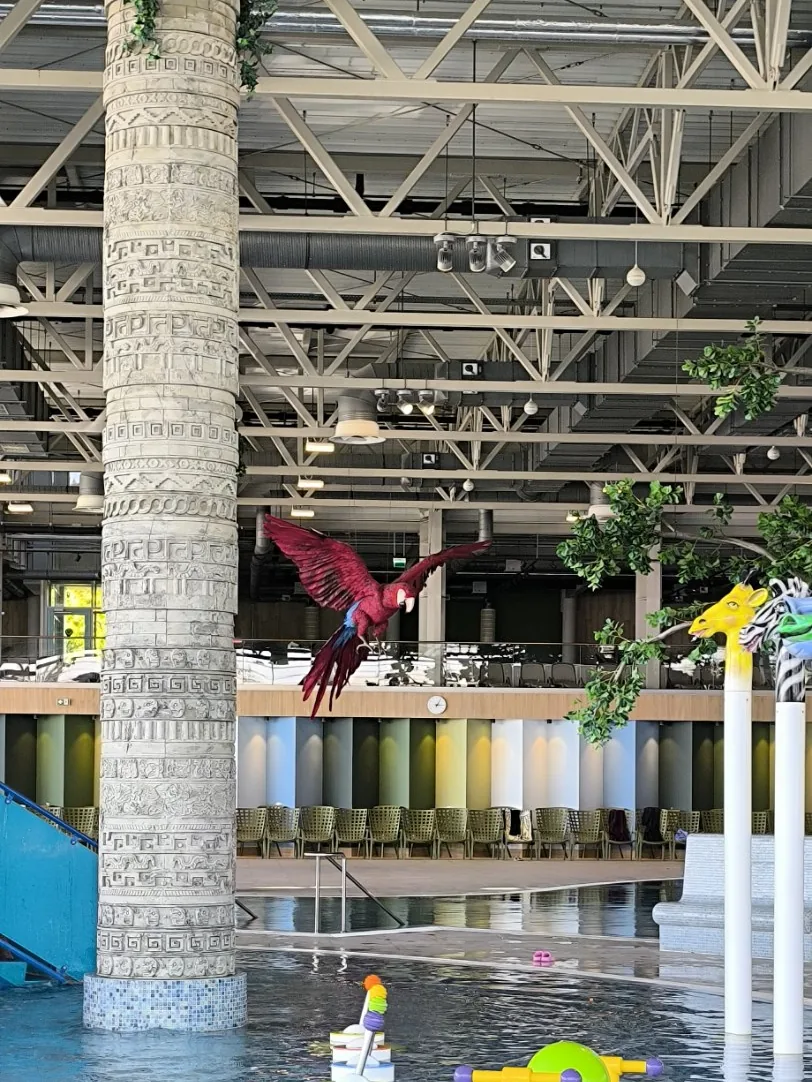
Amazonia water park, Timisoara. Left: the children’s pool. Right: a carved column and a model parrot.
Dinner, and the drive back in the dark
Dinner was noodles at Noodle Pack in Shopping City Timisoara, on Calea Sagului, which is on the way out of the city towards Serbia. My mother paid the first round, 60.48 lei; I went back for a large and a small pack and a Fanta, 81.48 lei, €15.53 on my card. My card was declined once at the till and went through on the second try; the first attempt shows in the bank app as frozen, not charged, so check your app before you pay twice.
We left the city after nine, Romanian time, back down DN59 through Sag and the same villages. The crossing back into Serbia is not on camera, but it was as quick as the morning. At 22:50 Serbian time I filled the LPG tank in Vrsac, at the Gaspetrol station on Belocrkvanski put: 40.14 litres at 108.40 RSD, 4,351.18 RSD, plus two iced coffees for the last hour, 370.00 RSD. I had left Pancevo with a full tank, so that fill is exactly what the day burned.
Was it worth it
Yes, as a day out, with one correction: leave earlier. We left at 07:49 and with the lost hour at the border it was mid-afternoon before we were in the city; a six o’clock start would give you the whole day. Compared with the Hungarian trip a week earlier, Hungary felt cheaper to me, though that is an impression from one dinner and one ticket, not a study. The road, the border and the parking cost nothing, the vignette cost less than a coffee, and the fuel for the whole day is in the table below.
What the trip cost
| Item | Cost |
|---|---|
| LPG — Gaspetrol, Vrsac (40.14 L × 108.40 RSD), filled back to full: the LPG used | 4,351.18 RSD |
| Petrol — about 15 L used, my estimate, at the last price I paid (207.00 RSD/L); not a receipt | about 3,105.00 RSD |
| Romanian road vignette (rovinieta), one day, bought online | €3.51 (18.40 lei) |
| Serbian motorway tolls | None recorded |
| Drinks — two iced coffees, Gaspetrol, Vrsac | 370.00 RSD |
| Food — Noodle Pack, Shopping City Timisoara, first receipt | 60.48 lei |
| Food — Noodle Pack, Shopping City Timisoara, second receipt | €15.53 (81.48 lei) |
| Amazonia water park, senior ticket | about 20 RON (from memory) |
| Known total in euro (card charges) | €19.04 |
| Plus, not converted to euro | 7,826.18 RSD (about 3,105.00 RSD of it estimated) + 80.48 lei (about 20 of it from memory) |
Practical notes
- Time zone — Romania is one hour ahead of Serbia. My phone switched after the border, so check which time a receipt or a booking uses.
- Road vignette — a one-day Romanian rovinieta, bought online on roviniete.ro: 18.40 lei, €3.51 on the card. Prices for longer periods and other vehicles: official CNAIR price list.
- LPG in Romania — €0.94 per litre on 30 September 2026, as noted on this trip.
- LPG in Vrsac — 108.40 RSD a litre at Gaspetrol on 30 September 2026.
- Mobile data — I used my Maltese SIM in roaming and did not buy a Romanian one. Romania is in the EU, so EU roaming rules apply: when I crossed, the operator's text said I could use up to 50 GB of my internet allowance while roaming, incoming calls are free, and calls and texts back to Malta are included. Above the monthly allowance it is €1.30 per GB. On this trip it cost nothing extra.
Follow the next drive
Every drive gets the same treatment: route, photos and what it cost. Subscribe to the newsletter to hear when the next one is up, or follow along on YouTube and Instagram.
- Local Roads into Hungary — one day on local roads, into Hungary at Rabe–Kubekhaza, September 2026.
- Zalaegerszeg & Budapest — a night crossing at Kelebija–Tompa, Zalaegerszeg and Budapest, September 2026.
- Road costs — every trip’s costs by category and by country.