The route we drove
Pancevo → along the Danube to Golubac → the Djerdap gorge, past Lepenski Vir to Donji Milanovac → Kladovo → Mihajlovac → inland to Zajecar → Radujevac → Negotin → back to Pancevo. Seven days, 19–25 July 2026. Google Timeline recorded 769 km across 27 driving segments, but parts of the route were not captured. No campsites and no tolls. One wrong turn, noted below.
Approximate itinerary from trip footage and Google Timeline. Every map coordinate is rounded to about a kilometre, including the line; exact sleeping locations are not published. Dashed lines join recorded points in order and are not the driven road path. Google Timeline recorded about 769 km; the complete trip distance is not confirmed. Click a marker for detail.
- Day 1, 19 Jul — Pancevo to Golubac~136 km
- Day 2, 20 Jul — Dobra, over the plateau, night by Donji Milanovac~97 km
- Day 3, 21 Jul — on to Kladovo~67 km
- Day 4, 22 Jul — Kladovo, then Mihajlovac~68 km
- Day 5, 23 Jul — inland to Zajecar, then Radujevac~175 km
- Day 6, 24 Jul — Negotin, back to Radujevac~16 km
- Day 7, 25 Jul — Negotin back to Pancevo~212 km
What it actually cost
| Item | Cost |
|---|---|
| LPG — ~70 L at 104.9 RSD/L | €63 total |
| Campsites | €0 — none used |
| Showers | €0 — water heated in the car |
| Food | ~€3–5 per day |
| Tolls on this route | €0 |
Fuel
| Type | Price (July 2026) |
|---|---|
| LPG (autogas) | ~105 RSD/L (~€0.90) |
| Diesel | ~220 RSD/L (~€1.88) |
| Petrol (95) | ~203 RSD/L (~€1.73) |
Tolls
| Route | Cost |
|---|---|
| Danube road (Belgrade → Djerdap) | Free — no tolls anywhere on this route |
| Motorways elsewhere (e.g. Belgrade → Nis) | Paid per section, cash or card at the barrier |
Sleeping & wild camping
Wild camping is not formally permitted in Serbia, and it is prohibited inside Djerdap National Park. In practice, sleeping in a parked car off the road along this stretch draws no attention — two nights were spent that way without a single knock on the window. Pitching a tent is a different matter and will get you moved on inside a national park.
Water, washing and insects
- Hot water for free — six litres left behind the rear window heats up over a day of driving. By evening it is warm enough to wash with.
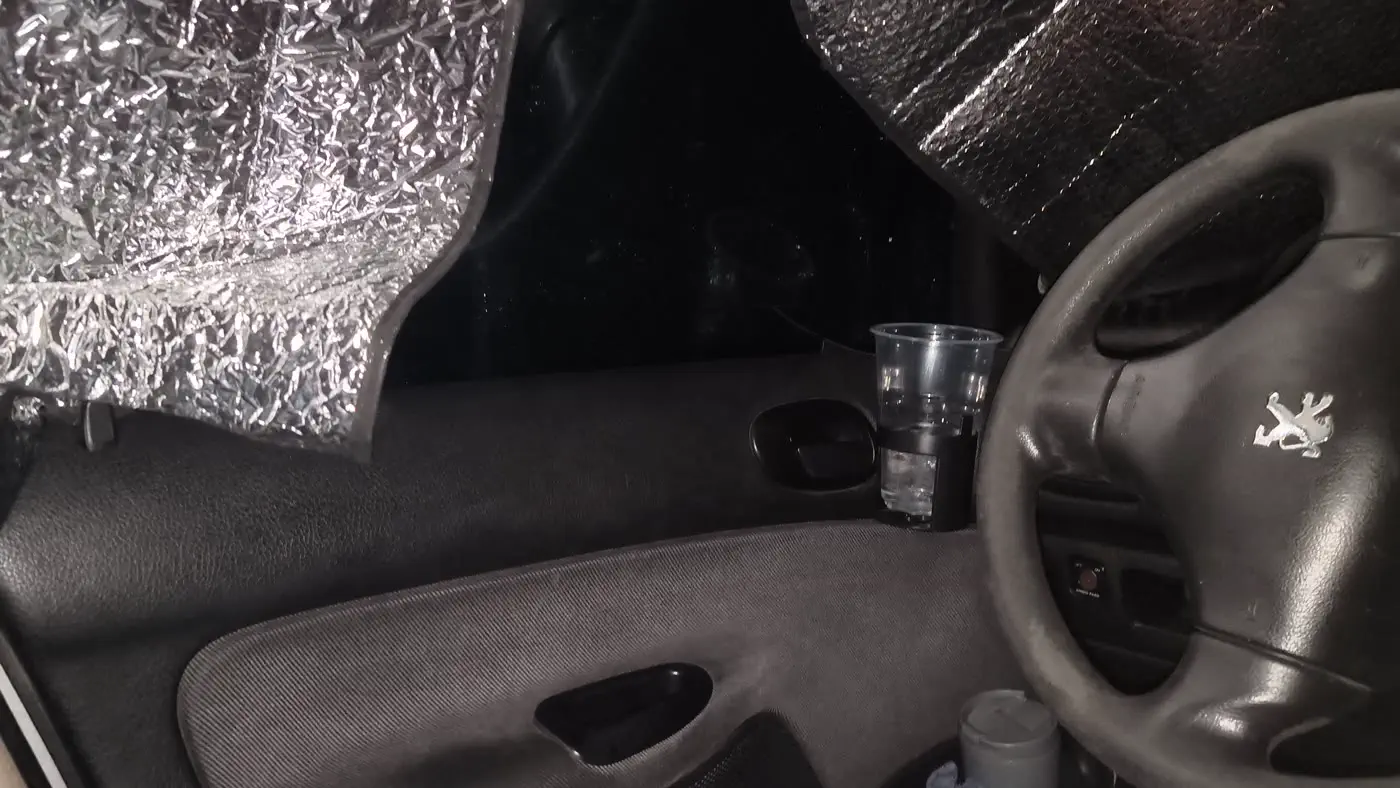
- Privacy and heat — reflective bubble-foil sunshades cut to the shape of each window. Nobody sees in, and the car stays cooler.
- Mosquitoes — a net held against the door frame with small magnets lets you sleep with a window open. The Danube has mosquitoes; this matters.
- Drinking water — village taps and cemetery taps are safe and everywhere along this route.
Crossing into Romania
Also worth knowing: the river is narrow in the gorge and phones on the Serbian side regularly latch onto Romanian networks. Check your roaming settings, and do not trust a GPS tag that claims you are in Romania.
Food
This is the cheapest part. Roadside stands in the villages sell tomatoes, cucumbers and fruit grown in the garden behind them, often unattended with a jar for the money. Bread from a village shop, a tin of pate, and that is breakfast for about €3. It is also, without exaggeration, better food than you will buy in a supermarket anywhere in Western Europe.
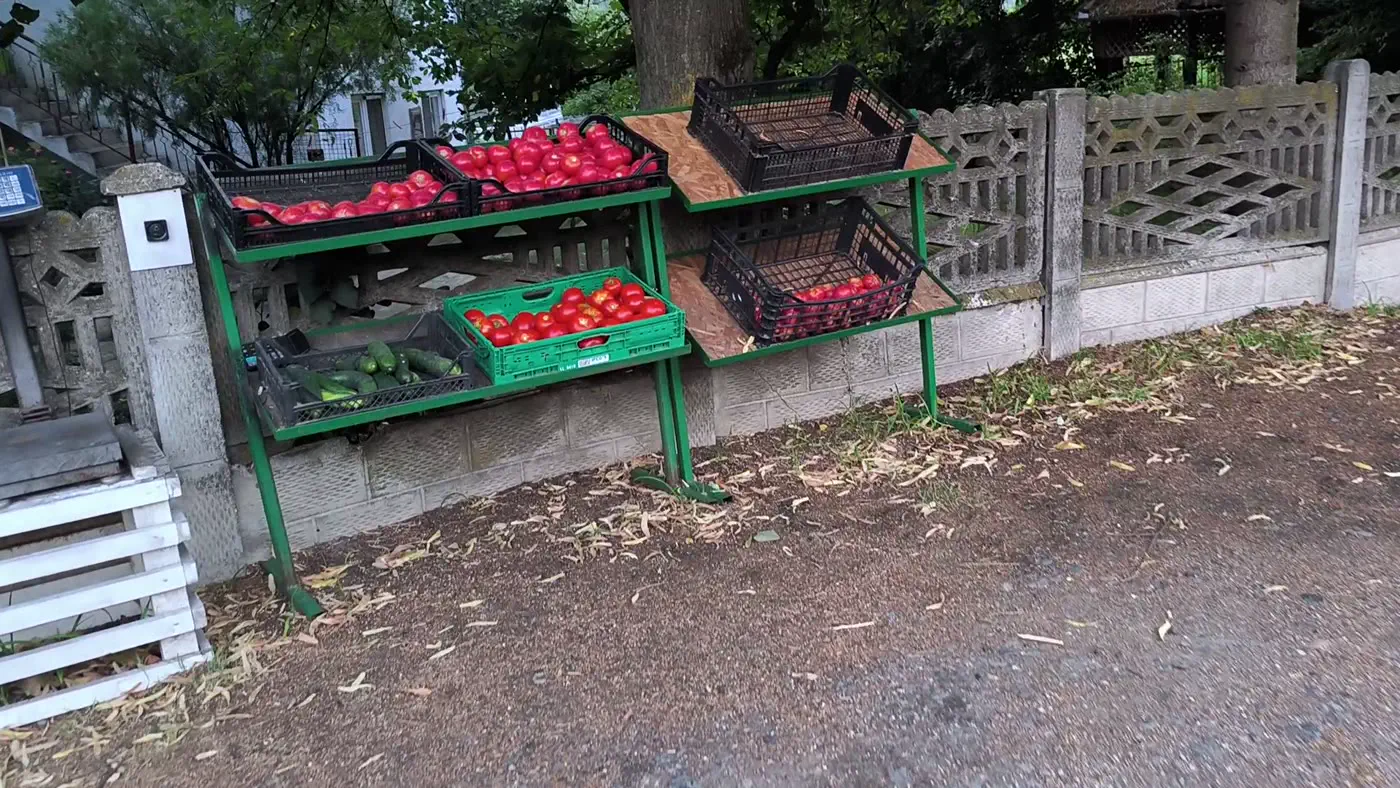
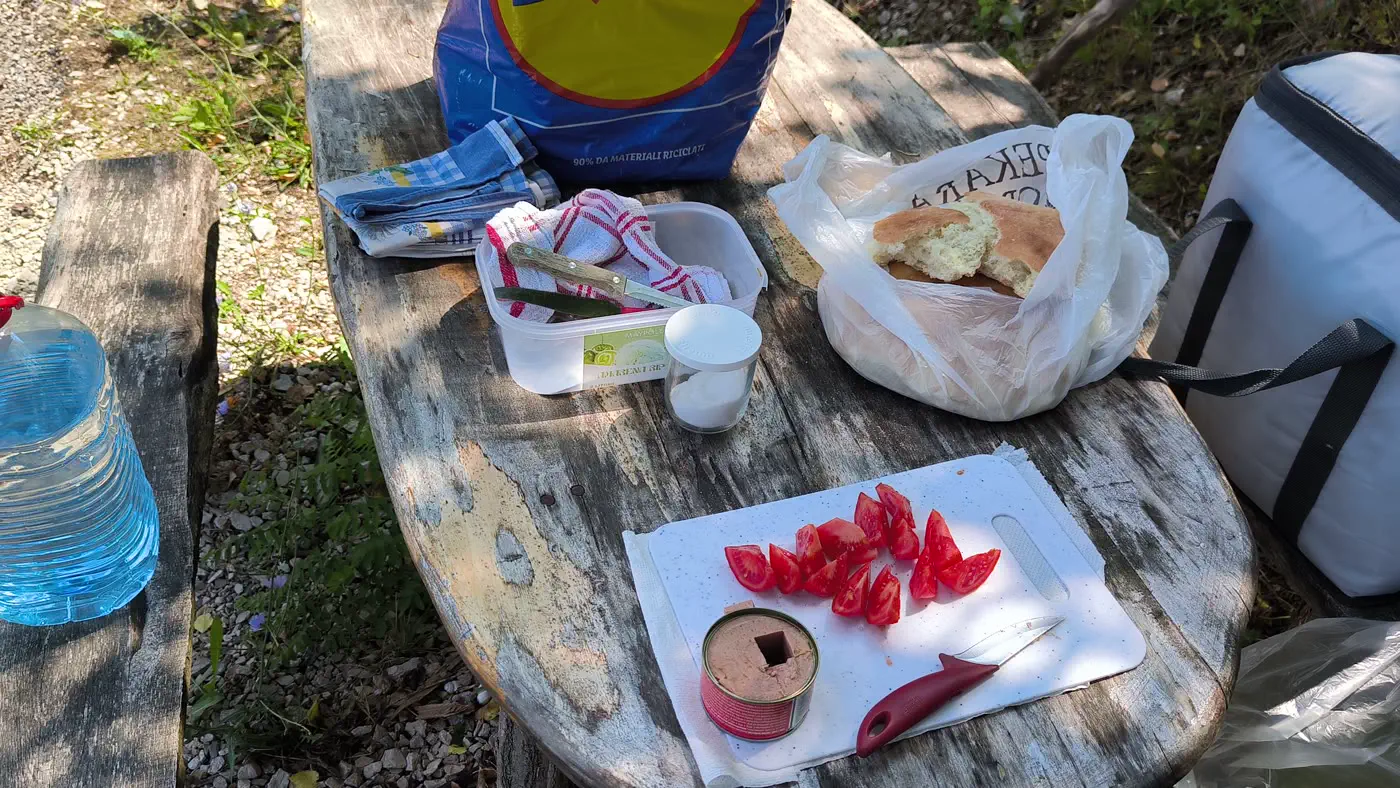
Left: a stand nobody was watching, money goes in the jar. Right: what three euros buys.
Internet & SIM
| Option | Price & data (July 2026) |
|---|---|
| Yettel tourist prepaid | ~999 RSD (~€8.50) — 50 GB, 30 days |
| MTS Tourist MAX | ~600 RSD (~€5) — 10 GB + 60 min, 14 days |
| MTS Tourist Unlimited | ~1,000 RSD (~€8.50) — unlimited data, 30 days |
| A1 Serbia | Cheap short data bundles from ~400–500 RSD |
| EU roaming | Serbia is not in the EU — EU SIMs roam at extra cost. Buy a local prepaid SIM. |
Shopping: where the cheap food actually is
| Shop | What it is good for |
|---|---|
| Svetofor | Hard-discount chain, bulk basics. The cheapest shelf prices in the country by some margin. Small range, no frills. |
| Lidl | Familiar to any European. Reliable, mid-price, good for bread and dairy. Mostly in bigger towns. |
| Maxi / Univerexport / Idea | Standard supermarkets, everywhere, slightly pricier |
| Village roadside stands | Fruit and vegetables, better than all of the above, often unattended |
| Honey from the roadside | ~1,000–1,200 RSD a jar (~€8.50–10), acacia up to ~1,500 RSD (~€13) |
The honey is worth stopping for. It is sold from houses along the road by the people who keep the bees, in proper jars, at a price a supermarket in Western Europe cannot come close to for the same quality. Bagremov med — acacia — is the prized one and costs a little more.
The Roman Danube
This gorge was the edge of the Roman Empire, and the remains are on the road rather than in a museum. Almost nobody stops at them.
- Trajan's Bridge (near Kladovo) — for over a thousand years the longest arch bridge ever built, thrown across the Danube around AD 105. What is left are the stone pillars on the bank, right by the water. Free, unfenced, and usually empty.
- Tabula Traiana — a Roman inscription carved into the cliff above the river, marking the road Trajan's engineers cut into the gorge wall. It was moved up the rock when the dam raised the water. It faces the river, so you can only see it properly from a boat.
- Diana Fortress (Karatas, near Kladovo) — a Roman military camp at the far eastern end, guarding the rapids. Substantial walls still standing, no ticket booth, no crowd.
Worth the detour
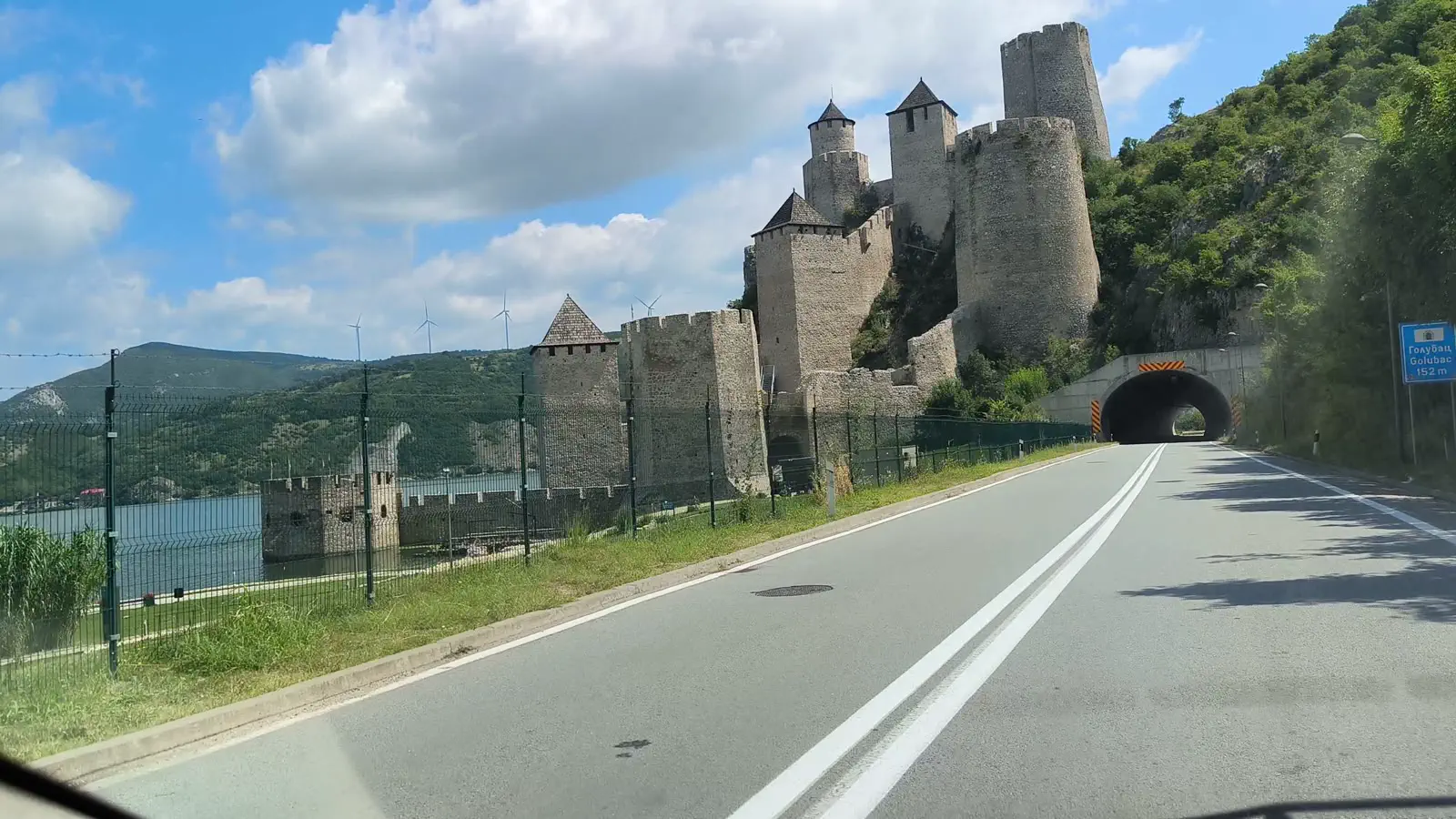
- Golubac Fortress — sits exactly where the gorge begins. Restored, and the one paid stop worth making.
- Lepenski Vir — a settlement roughly 8,000 years old, directly on the road. You can be camping in a car two kilometres from where people lived before agriculture existed.
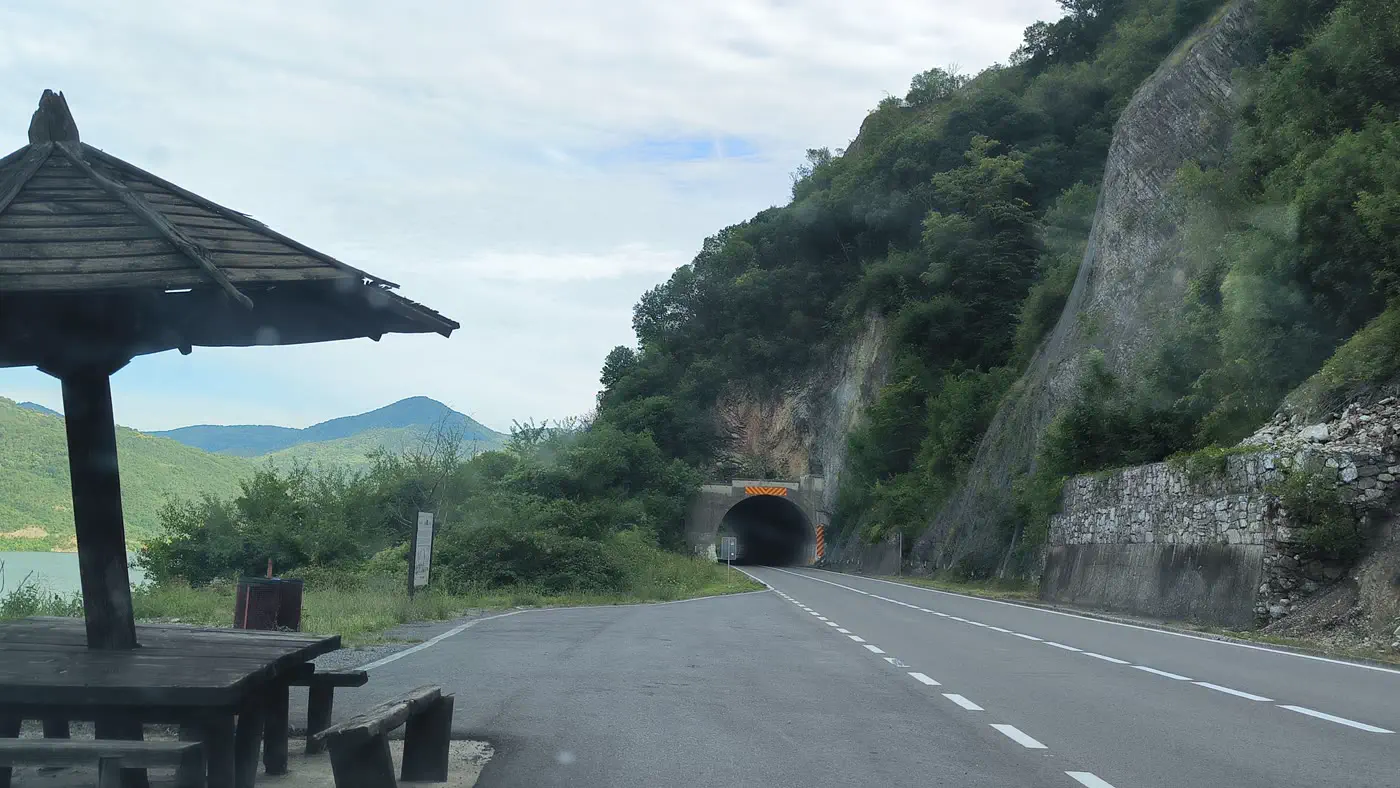
- The road above Donji Milanovac — climb inland and the whole gorge opens below you. No marked viewpoint; just stop where it looks right.
- Brnjica — small village, roadside produce, good place to stock up before the emptier stretch east.
Would we do it again
Yes, and slower. Seven days is enough to drive the route; it is not enough to sit anywhere. The best moments were the unplanned ones — an unattended produce stand, and a view found while driving forty kilometres to buy headache tablets.